The Great Falls region shows what happens when development driven by economic pressures and
territorial policies unfolds without environmental awareness. A landscape once rich in wildlife
and biodiversity was gradually replaced by dams, fences, houses, and golf courses.
ENVIRONMENT
Environment, Wildlife & Biodiversity
Decades of environmental research show a consistent pattern: most people say
they care about the environment, but that concern rarely determines their choices.
Environmental Concern Scales reliably measure attitudes and worry, but they do not
predict actual behavior because environmental concern collapses when it conflicts
with stronger life priorities, such as comfort, money, freedom, group identity,
work, or safety. This “attitude–behavior gap” is the central finding in the field.
People express concern, but other priorities dominate their decisions. So, they never
get around to acting in the best interest of people and the environment. What has
been missing is a way to measure those competing priorities directly.
When people are caught in day to day struggles or opposition, as both research and
Maslow’s observations support, they never reach the higher levels of functioning,
so they never get around to acting. This may be why people rarely do what is most
important for the environment. Caring about the environment simply doesn’t rise high enough on their list
of actions. Even those of us who care deeply often become so consumed by defense,
conflict, and trying to prevent further destruction that we don’t act in positive,
constructive ways that improve biodiversity, wildlife, and balance. Opposition
absorbs our time, money, and energy, leaving very little capacity to build or
create a better environment.This requires further research falling under the
category of relational science.
🌍 A Concise, unified Impact Statement from Copilot: "Pollution + Resource Use Human activity now exceeds the
Earth’s ability to absorb waste and regenerate resources. We have removed one‑third
of the world’s forests, depleted over one‑third of global fish stocks, and driven
steep declines in wildlife through hunting, pollution, and land conversion. Air, water,
and soil pollution contaminate ecosystems worldwide, while resource extraction — from
fossil fuels to agriculture — disrupts climate, degrades habitats, and accelerates
species loss. Together, these pressures have pushed natural systems past their safe
limits, reducing the planet’s capacity to sustain life.
A healthy environment supports all life. When we protect ecosystems, wildlife,
and natural resources, we create stability, resilience, and well‑being for current and future generations."
Key Focal Points:
Quantifying Human-Caused Environmental Destruction
Global evidence leaves no doubt that human activity has caused large-scale, measurable environmental destruction.
The 2024 Living Planet Index reports a 73% average decline in monitored wildlife populations since 1970,
based on data from 34,836 populations across thousands of species (Ritchie & Spooner, 2024 – Our World in Data).
This does not mean 73% of species are extinct, but it does mean that the average abundance of wildlife
populations has collapsed. Half of all monitored populations are declining, and the steepest losses are driven by
human pressures such as deforestation (loss of one‑third of all forests at a rate of
10.9 million hectares per year
), habitat loss, hunting, and poaching.
More than 20,000 African elephants are killed annually, illegal wildlife trafficking is a
$7–$23 billion global industry, rhinos are poached at a rate of roughly one every 15 hours,
tiger populations remain critically low, and elephant losses across Africa reach tens of thousands per year.
In some regions, historic poaching wiped out tens of thousands of sea turtles. These numbers vary by species
and region, but together they reveal the scale of human pressure on wildlife.
Additional drivers include overfishing
(
FAO estimates that 35.5% of global fish stocks are overfished
), pollution (ocean acidity has increased by about 30% since pre‑industrial times,
atmospheric CO₂ reached ~427 ppm in early 2025, and air pollution causes
6.7 million premature deaths annually), and the global food system, which is responsible for approximately
26% of greenhouse gas emissions. Food production is also the
largest driver of nutrient imbalances (nitrogen & phosphorus),
significantly degrading ecosystems worldwide.
(Living Planet Index analysis;
WWF Living Planet Report 2024
)
Domestic Birds Now Dominate Global Bird Biomass
Research cited by Sir David Attenborough and supported by global biomass analyses shows that
around 70–75% of all birds on Earth (by total biomass) are domesticated poultry,
primarily chickens. This finding comes from a landmark study published in the Proceedings of the
National Academy of Sciences (PNAS), which quantified the mass of all mammals, birds, reptiles,
and fish on the planet. The study found that the biomass of domesticated birds vastly
outweighs that of all wild birds combined, reflecting the scale of industrial agriculture
and the severe decline of wild bird populations worldwide.
For reference, see:
For reference, see:
Wild Mammals Now Make Up Only 4–5% of All Mammal Biomass
Global biomass research cited by Sir David Attenborough shows that
only about 4–5% of all mammals on Earth are wild mammals.
The remaining 95% consists of humans and our domesticated animals,
primarily cattle and pigs. This finding is based on a comprehensive analysis of
global mammal biomass published in the Proceedings of the National Academy of Sciences (PNAS)
and summarized by Our World in Data. According to the dataset,
humans account for roughly 36% of mammal biomass, livestock for about 59%,
and wild mammals for only 5%.
These numbers reveal the extent to which human activity and industrial agriculture
now dominate the planet’s mammalian life.
Source:
Our World in Data – Mammal Biomass Analysis
.
Habitat degradation remains the dominant cause of biodiversity loss, with climate change adding accelerating stress
as species shift toward poles and higher elevations to survive. These findings are consistent across regions and
taxonomic groups and are reinforced by decades of ecological research: human land use, resource extraction, and
ecosystem disruption are dismantling the living systems that support biodiversity, wildlife, and ecological balance.
The scale and clarity of the data leave no ambiguity, the decline is real, global, and overwhelmingly caused by us.
Tree Loss and Restoration
Tree loss is one of the most visible and consequential forms of habitat degradation. Global assessments show that
deforestation and forest fragmentation remain extensive, reducing the capacity of ecosystems to recover. Forests
regulate climate, stabilize soils, cool landscapes, and support the majority of terrestrial biodiversity; when they
are removed, these systems weaken immediately. Although reforestation and agroforestry efforts are expanding, the
persistence and scale of ongoing losses continue to shape ecosystem vulnerability to heat, drought, wildfire, and
species decline. This imbalance is recognized as a major driver of climate instability and a central mechanism behind
the global biodiversity trends described above. Based on these findings, continued losses would reasonably be expected
to leave ecosystems increasingly exposed to intensifying heat and aridity unless mitigated.
Source:
IPCC- Climat Change and Land, Chapter 2 Land–climate interactions
Eco-Anxiety in Children and Young People
A growing body of research documents eco-anxiety in children and young people—
emotional distress caused by awareness of environmental decline, biodiversity loss, and climate change.
A 2025 systematic review in Nature Mental Health found that children experience
fear, sadness, guilt, anger, and helplessness in response to environmental change,
with higher levels of anxiety linked to media exposure and perceived government inaction.
A 2022 scoping review in Frontiers in Psychology reported similar findings, noting that
young people often feel overwhelmed and emotionally burdened by the state of the planet.
Clinical research published by Taylor & Francis in 2024 shows that eco-anxiety can range from
mild worry to severe distress, including grief and fear for the future.
UNICEF’s global child mental health reports identify climate change as a significant psychological
stressor, with many children reporting fear, grief, and a sense of responsibility
for environmental problems they did not create.
Together, these studies demonstrate that eco-anxiety is a real, measurable phenomenon
affecting children worldwide.
Why Environmental Loss Triggers This Response
The environmental problems we face are far greater than most people realize, and the scale of loss
can trigger a psychological response rooted in the amygdala—the brain’s threat‑detection system.
When people feel overwhelmed, helpless, or confronted with danger they cannot control, the amygdala
activates, narrowing attention, increasing stress, and pushing the mind toward avoidance or escapism.
Instead of engaging with the problem, many people shut down, look away, or distract themselves because
the emotional weight feels too overwhelming.
Key References
Montana Climate & Environment: Key Facts
Montana’s climate is shifting rapidly, with visible impacts across rivers, forests, wildlife, and communities. These facts summarize the most important environmental changes documented in recent Montana reporting.
-
Record-Breaking Heat:
Miles City reached 115°F during a regional heat dome, reflecting a trend toward hotter, longer summers across eastern and central Montana.
-
Warming Rivers & Lower Flows:
Montana river guides report reduced flows, higher water temperatures, and stressed trout populations. Warm rivers increase wildfire risk and reduce recreation quality.
-
Snowpack Decline:
Winters are becoming warmer and drier, shrinking snowpack and shortening ski seasons. Reduced spring runoff affects agriculture, reservoirs, and river ecosystems.
-
Wildfire Intensification:
Hotter summers and drier forests contribute to longer wildfire seasons, more smoke exposure, and increased health risks for seniors and children.
-
Public Health Impacts:
Young Montanans and health advocates highlight rising concerns about heat-related illness, air quality degradation, and fossil-fuel expansion near communities.
-
Housing & Emissions Insight:
Research shows that residents in denser housing (e.g., apartments) drive less, offering a practical emissions-reduction strategy for Montana’s growing towns.
-
Ecosystem Stress & “Eco-Grief”:
Outdoor workers and guides describe witnessing rapid ecological change—warming rivers, shifting wildlife patterns, and unpredictable seasons—leading to emotional and economic strain.
Sources: Montana Senior News —
Montana Senior News — Environment reporting
Choosing the Wiser Path for Environment:
-
Leadership that recognizes the crisis:
Both the population and leaders need to have a better understanding of the seriousness of environmental decline and prioritize long-term ecosystem health.
-
slow environmental decline needs to be more visible to people:
Use monitoring, stories, and local examples to reveal gradual damage and build stronger relationships with nature.
-
Public recognition and early education:
Help people grasp the gravity of the crisis and teach children about
ecosystems, interdependence, and biodiversity. Children build healthy
relationships with the environment through positive experiences. When they
explore nature through play, curiosity, and hands‑on learning activities that
strengthen their connection to the natural world, they form emotional and cognitive
associations that support lifelong environmental awareness and care.
These early experiences should also promote an understanding of restoration
and environmental improvement, teaching children that their actions can
protect and renew the natural world they depend on.
-
Help people escape the survival grip:
Reduce daily survival pressures so people have the stability and bandwidth to reflect and engage with solutions.
-
Strengthen reasoning over emotional reactivity:
Encourage reflective thinking, emotional regulation, and mindful problem-solving instead of stress-driven reactions.
-
Teach relational science:
Show how relationships between people, systems, and nature shape outcomes and why interdependence matters.
-
Redesign systems for positive environmental relationships:
Shift policies, incentives, and norms toward stewardship, regeneration, and long-term resilience.
-
Prioritize restoration and recycling:
Restore ecosystems, rebuild biodiversity, reduce waste, and create circular systems that minimize harm.
-
Value long-term thinking over short-term gains:
Favor decisions that protect future generations and ecosystem stability instead of quick, destructive benefits.
-
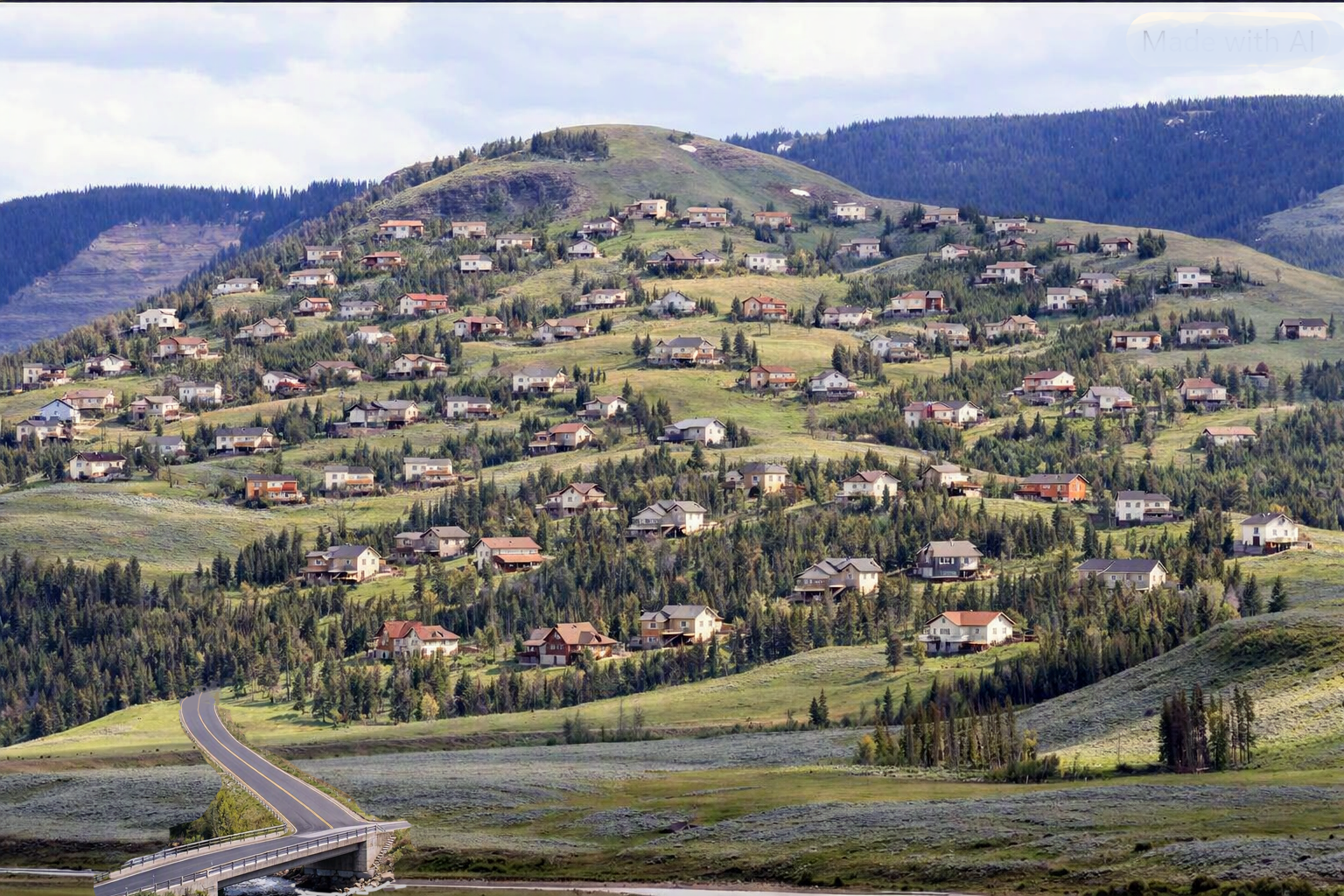
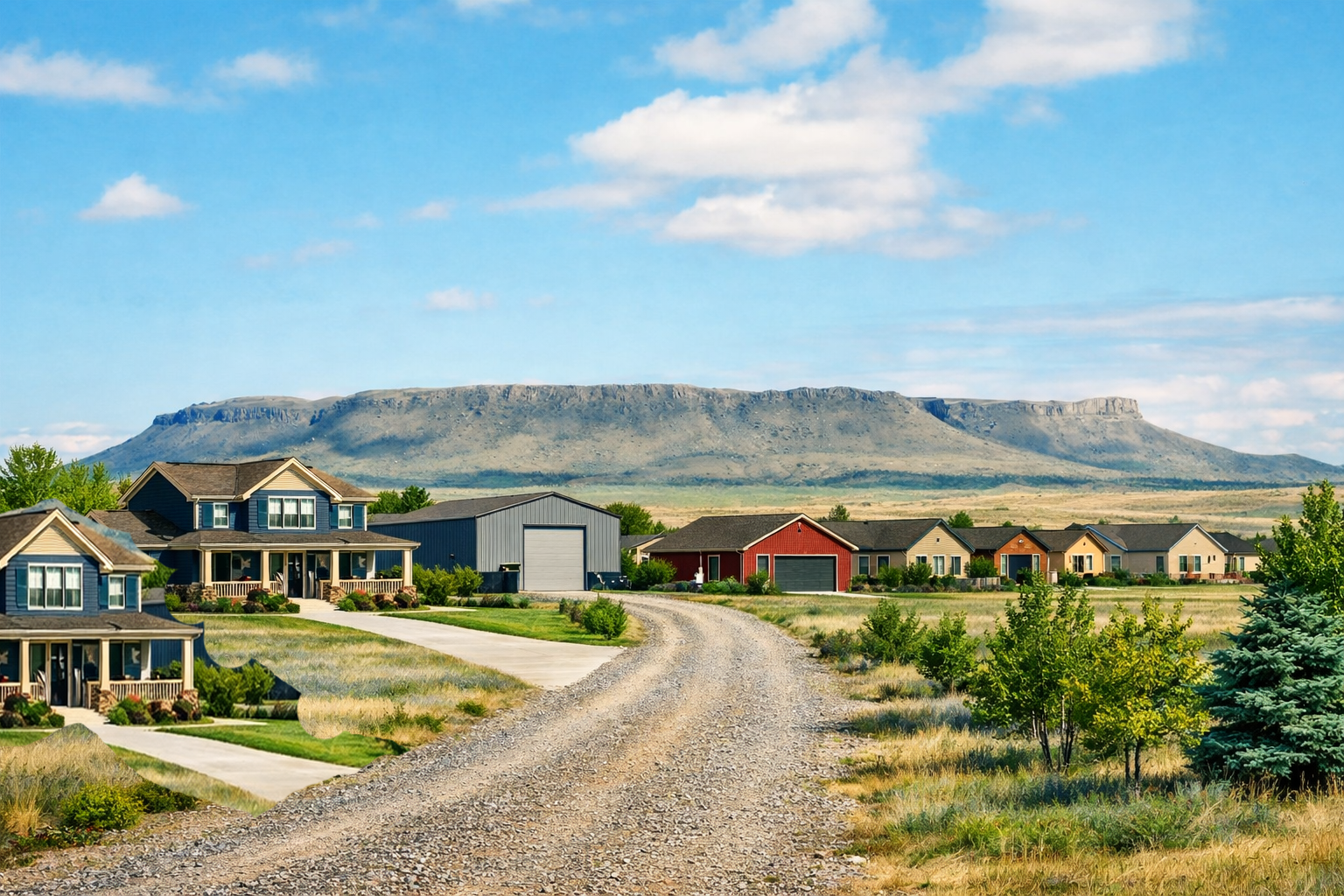
Construction
For generations, homes and buildings were designed in ways that made sense for the time, prioritizing
convenience, affordability, and immediate human needs. Even those who came to Great Falls because of its
natural beauty often built in traditional patterns that unintentionally covered the very landscapes they
cherished, diminishing the region’s beauty, native habitat, and biodiversity.
Today, we have the opportunity to think differently. We can design in ways that restore the land,
strengthen natural ecosystems, and bring back the beauty that first inspired people to come here.
Development can support both thriving communities and a thriving environment by enhancing biodiversity,
protecting the character of the land, and creating places that benefit people and nature together, reflecting
and honoring the natural landscape that makes Great Falls unique.
-
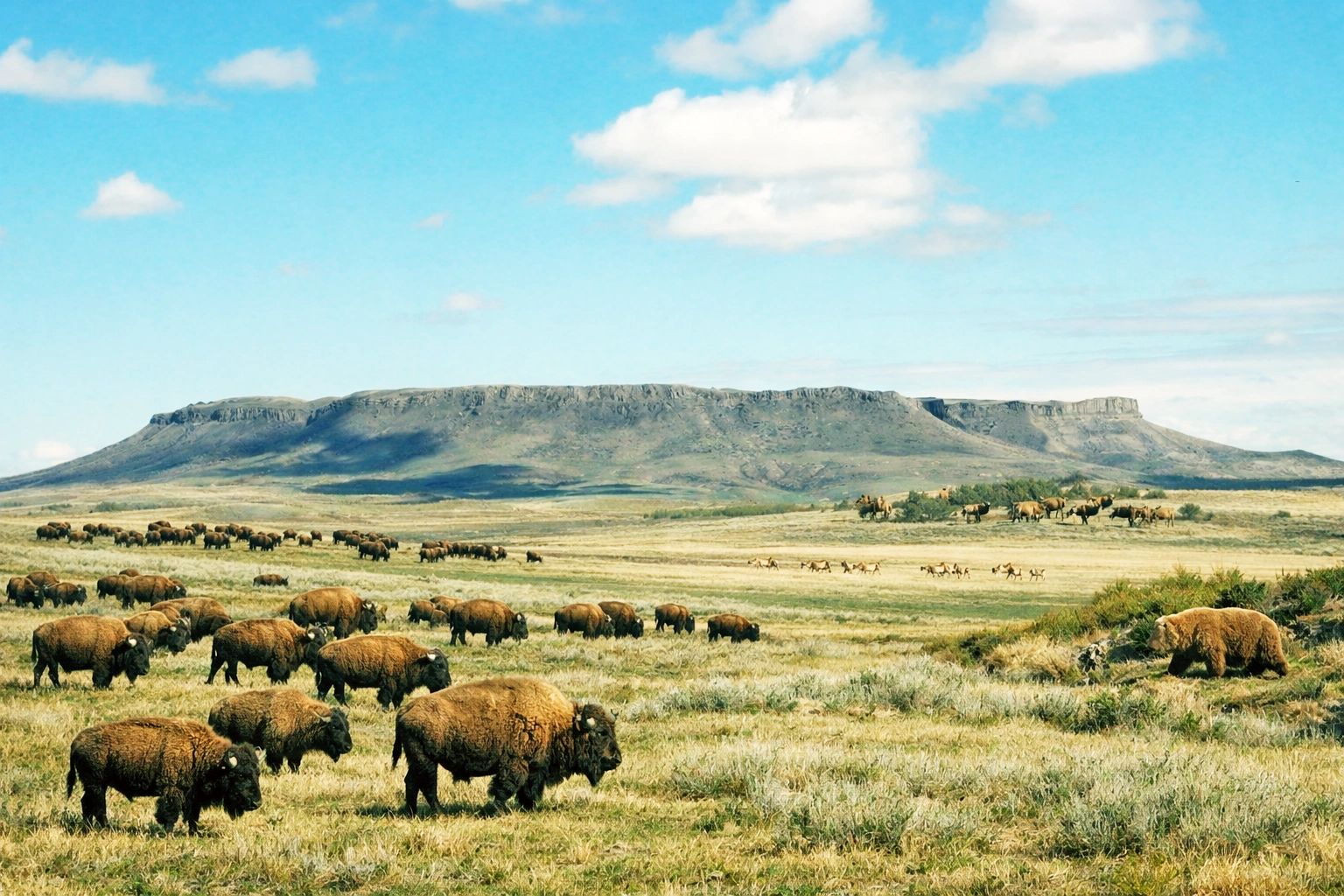
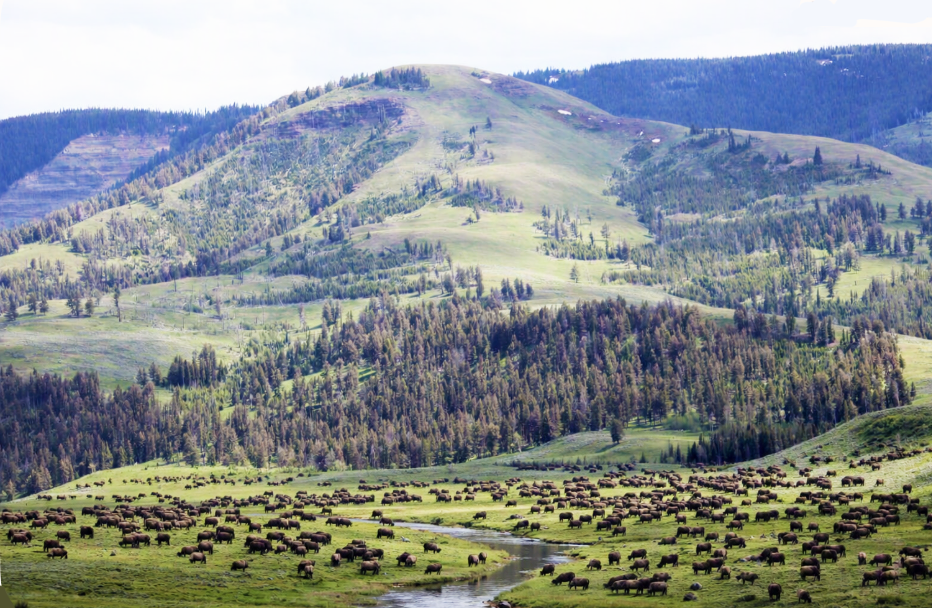
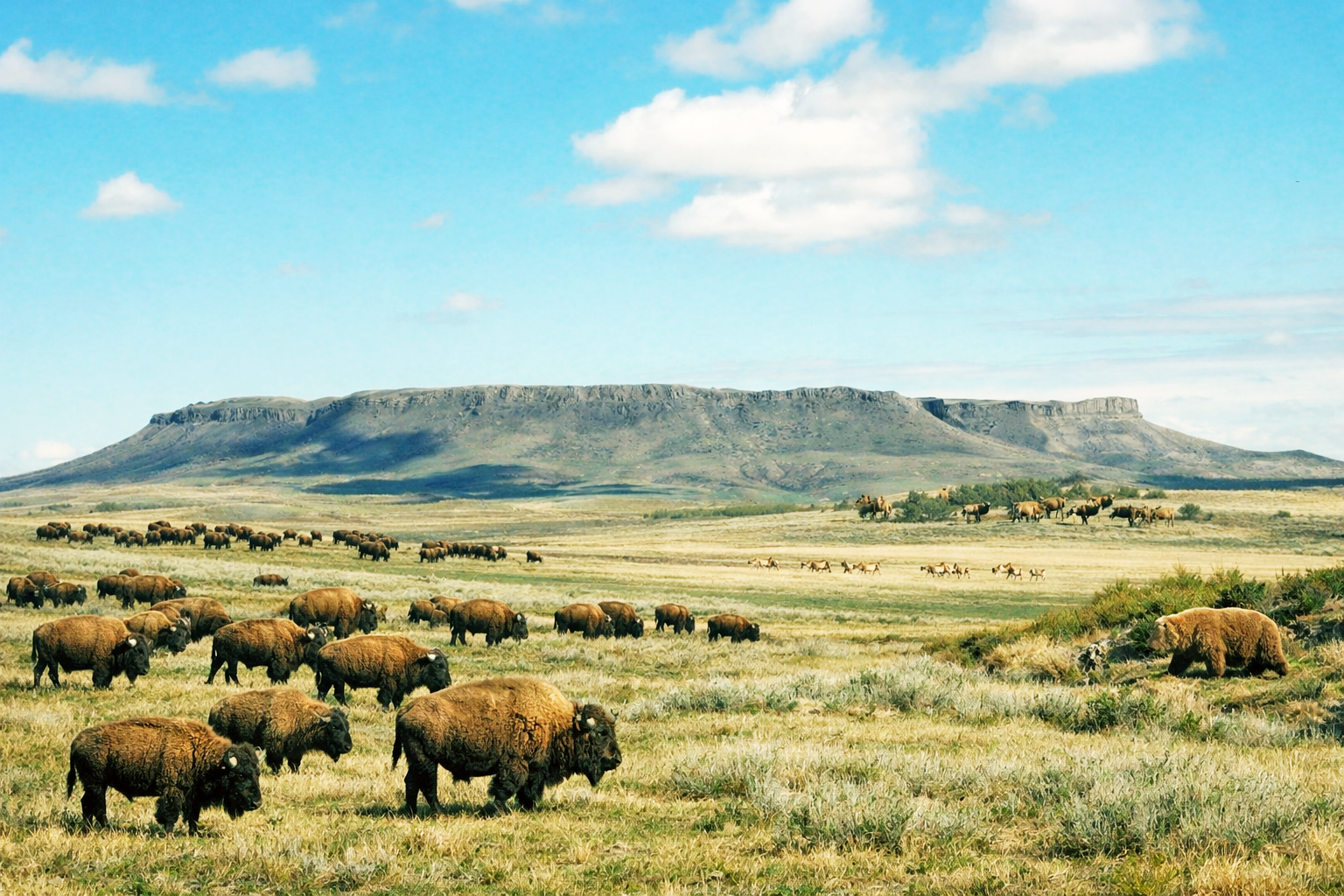
Natural Landscape with Bison
Same Landscape with Houses
Facing the Truth
- Yellowstone contains the greatest concentration of hydrothermal features in the world, including more than half of the planet’s active geysers.
- Old Faithful is the most famous predictable geyser on Earth, erupting roughly every 90 minutes.
- The park spans 2.2 million acres of intact wilderness; forests, valleys, rivers, waterfalls, and mountains rising above 11,000 feet.
History of the Washburn Expedition
- During the 1870 Washburn–Langford–Doane Expedition, members discussed the
fate of Niagara Falls, a natural wonder already heavily commercialized and
degraded by development. Their observations helped shape the idea that Yellowstone
should be protected “for the benefit of the people,” meaning protected from development
so people could experience an intact world.
- People love Yellowstone because it gives them a direct encounter with a
world that still functions ecologically. If we want beautiful land to stay
beautiful, we must protect the ecological conditions that create the beauty,
something the administrations over the years should be highly commended for preserving.
Ten Reason‑based actions that stabilize the natural world
- Reduce fossil fuel emissions: because climate stability is the foundation of every living system.
- Protect forest canopy: shade creates moisture; moisture creates life.
- Preserve natural moisture cycles: cloud formation, dew, cool soil, and intact hydrology keep landscapes damp and biodiverse.
- Build only in ways that disappear into the land: such as buried or earth‑integrated structures that preserve the entire ecosystem, biodiversity, and forest above.
- Acknowledge that people build where land is beautiful: and that surface development destroys the very canopy, moisture, and biodiversity that create that beauty.
- Prevent fragmentation: keeping wildlife, fungi, soil networks, and understory connected so ecosystems remain whole.
- Maintain intact biodiversity: the resilience engine that stabilizes forests, moisture, and microclimates.
- Keep soils cool, shaded, and undisturbed: because healthy soil regulates temperature, water, and life.
- Avoid development patterns that dry landscapes: drying intensifies fire, smoke, erosion, and ecological collapse.
- Treat beautiful land as living systems, not real estate: ensuring every human action benefits both people and Earth together.
-
Beauty
Think about how we can enhance our environment so it becomes more attractive, supports biodiversity, and
improves the climate. The more people who participate, the better the results. A single mature tree absorbs
roughly 22–48 pounds of CO₂ per year, depending on species and climate. If every person on Earth planted one
tree, 8 billion trees that would remove an estimated 160–380 billion pounds of CO₂ each year, equivalent to
taking 30–70 million cars off the road. Grow rainforests. Kelp forests go even further, absorbing 2–20 times more CO₂ per acre than most forests.
Sea otters help kelp thrive by keeping urchin populations in balance, and healthy kelp forests in turn support large aquatic
life and restore entire marine ecosystems. Grow kelp projects and forests.
-
Reasoning in the Best Interest of the Earth-Bison Example
When reasoning aligns with the Earth’s long‑term health, resources are used
to expand restoration, not to fight opposition. For instance, $200 once went
toward growing bison range, a direct investment in biodiversity and land
recovery. Now, that same $200 is being spent to oppose removal from BLM land,
diverting energy, time, and money away from restoration. This shift shows how
emotional opposition can consume the very resources needed for constructive progress.
Bison represent ecological reasoning at its best: they restore prairie grasses,
improve soil health, retain water, and support countless species. Their presence
rebuilds the natural balance that cattle and fences disrupted. When reasoning stays
focused on ecological benefit rather than conflict, every dollar and hour strengthens
the land instead of defending territory.
Native keystone species: Bison evolved and remain a precedent with North American grasslands and actively increase plant diversity; cattle do not. Bison-grazed prairies show 86% higher native plant richness, compared to only 30% under cattle.
- Native keystone species: Bison evolved with North American grasslands and actively increase plant diversity; cattle do not. Bison-grazed prairies show 86% higher native plant richness, compared to only 30% under cattle.
- Constant movement prevents overgrazing: Bison graze briefly then move, stimulating regrowth and protecting riparian areas. Cattle linger, overgraze, and degrade streambanks.
- Selective grazing restores prairies: Bison target dominant grasses, allowing wildflowers, forbs, medicinal plants, and less competitive species to return, creating a mosaic of habitats that boosts biodiversity.
- Wallowing creates micro wetlands: Only bison create wallows, which become temporary wetlands supporting amphibians, insects, and unique plant communities. Cattle do not wallow.
- Better soil health: Sharper hooves aerate soil and press seeds in, increasing plant diversity and soil carbon storage. Cattle hooves compact soil.
- Higher drought resilience: Bison-managed prairies remain more resilient during extreme drought compared to cattle-managed ones.
- Lower indirect emissions: Bison are almost entirely grass-fed on native rangelands, avoiding the high emissions from feedlot grain production and manure lagoons associated with cattle.
- Primary rancher objections: Ranchers object to bison because brucellosis is transmitted to cattle, but elk and deer carry brucellosis, which are more prevalent on BLM land.
- Historical precedence: Bison had precedence for tens of thousands of years, 30-60 million historically, with about 500K now.
- Health measures: Bison are tested and vaccinated against brucellosis.
- Habitat presence: They have been on BLM land for roughly 10,000 years predating any introduction of cattle.
- There are methods to manage and keep bison herds within restricted areas that don't necessarily require fences for saftey reasons
- Definition: Wild or livestock definitions include production-oriented animals, of which bison could be both.
-
Supporting Biodiversity Through Simple Design
Biodiversity is the foundation of ecological stability. Every species, from
microbes to pollinators to apex predators, plays a role in nutrient cycling,
soil formation, water regulation, and ecosystem resilience. When biodiversity
declines, these systems weaken, making landscapes more vulnerable to drought,
pests, erosion, and climate stress.
Global evidence is clear. The WWF Living Planet Report 2024 shows a 73% average
decline in monitored wildlife populations since 1970, driven by habitat loss, pollution,
overfishing, and land conversion. UNEP and FAO emphasize that restoring even small habitat
patches can meaningfully rebuild ecological networks in human‑dominated landscapes.
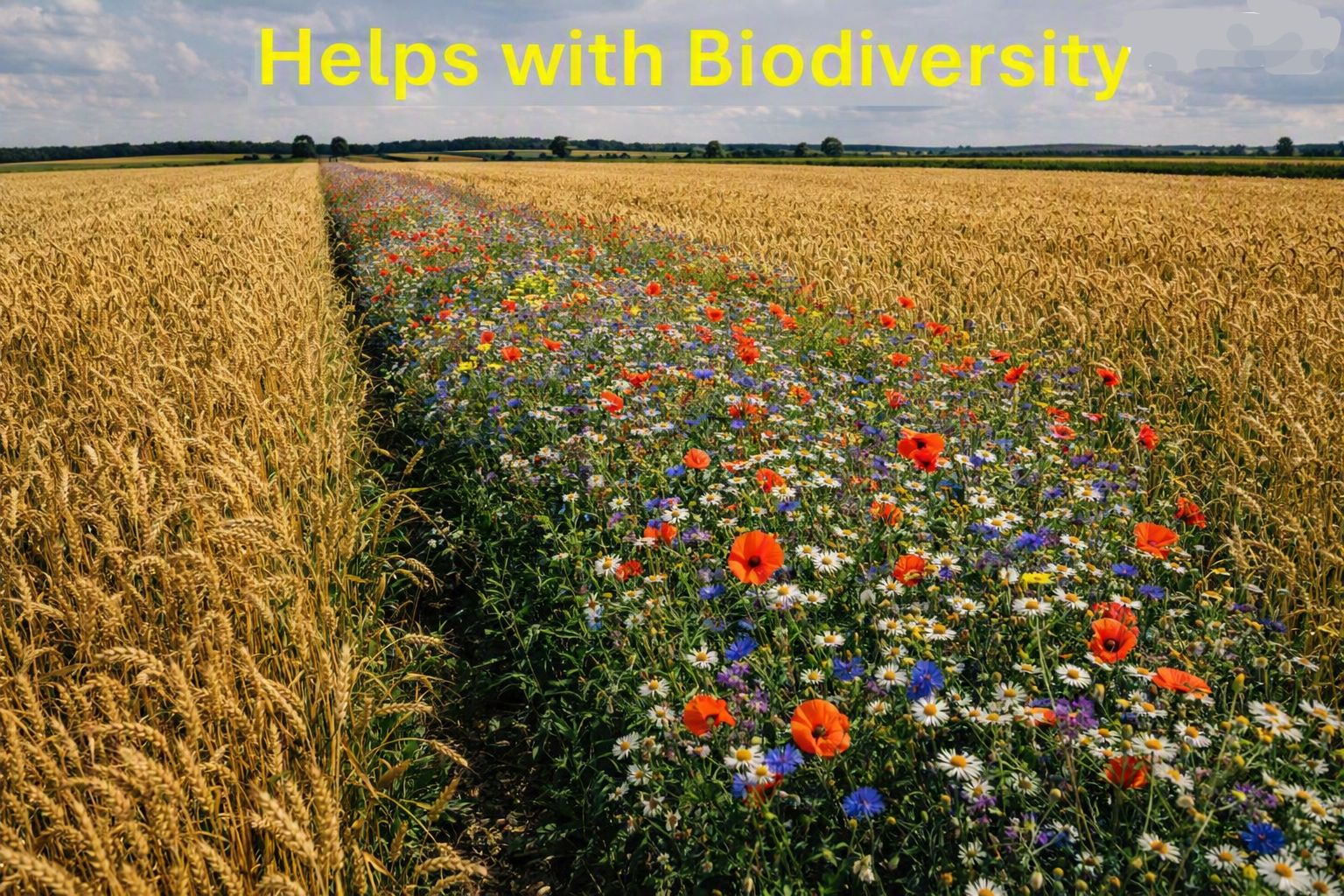
Flower strips are one of the simplest and most effective tools for restoring biodiversity.
They provide nectar, pollen, shelter, and micro‑habitats for pollinators, beneficial insects,
soil organisms, and small wildlife. Research shows that these strips increase species richness,
reduce pesticide dependence, improve soil health, and strengthen ecosystem resilience.
In landscapes where development has fragmented habitat and reduced wildlife, small
patches of restored vegetation act as living corridors that reconnect ecosystems
and support the return of biodiversity. A narrow strip of flowers can begin to
repair the ecological fabric that development has worn thin.
Forest Pathways Report 2023.
Living Planet Report 2024.
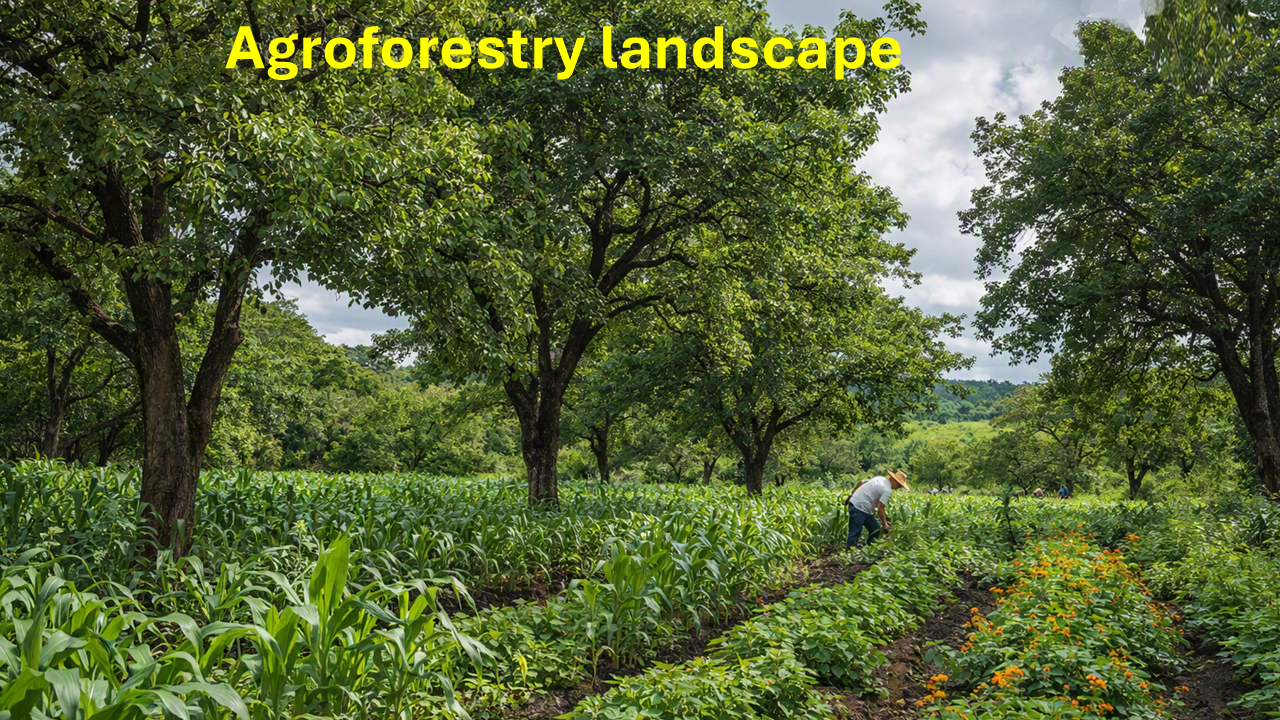
Since roughly 80% of global deforestation is driven by agricultural expansion,
agroforestry—the integration of trees, shrubs, and crops within the same farming
system—is recognized by major scientific and environmental institutions including
WWF, FAO, UNEP, and the IPCC as one of the most effective nature‑based solutions
for restoring land, increasing food security, and storing carbon. Agroforestry
creates a living partnership between agriculture and biodiversity. Across the
world, from Kenya to the United States, farmers use combinations of trees, hedges,
and shrubs to provide shade, shelter, carbon capture, and food. In Kenya, documented
case studies show that agroforestry increases carbon storage and improves smallholder
livelihoods, while in the U.S., regenerative systems such as silvopasture and alley
cropping are restoring soil health, reducing erosion, and creating wildlife corridors
across farmland. Globally, agroforestry is practiced from the tropics to temperate
zones in Africa, Asia, Europe, and the Americas—wherever farmers seek to balance
productivity with ecological resilience. Trees in these systems clean the air,
stabilize soil, fix nitrogen, and create microclimates that protect crops and livestock.
By integrating biodiversity directly into agriculture, agroforestry transforms farms into
regenerative ecosystems that sustain both people and the planet.
Agroforestry is shown to be a powerful climate‑smart land‑use system, with
a systematic review of 109 studies demonstrating that integrating trees with
crops and livestock can sequester 3.5–9.8 Mg CO₂ per hectare per year, increase
soil organic carbon by about 15%, and boost on‑farm biodiversity by 25–40%. The
review also finds that agroforestry strengthens climate adaptation by improving
soil fertility, enhancing water retention, reducing runoff and erosion, and increasing
food security — including yield gains of up to 30% and a 25% improvement in household
food security in Ethiopia. Despite these benefits, adoption remains limited due to
land‑tenure insecurity, weak policy incentives, and lack of technical support,
underscoring the need for stronger institutional and financial frameworks to
scale agroforestry’s mitigation and adaptation potential.
Halting Deforestation, an Agroforestry Approach
A Systematic Review on the Role of Agroforestry Practices in Climate Change Mitigation and Adaptation
Wikipedia- Agroforestry
Your Accepted Mindful Solutions appear here
Excellent Resources Below
Sources: deforestation:
Species Preservation
-
IUCN – International Union for Conservation of Nature
– The world’s leading authority on species extinction risk, home of the IUCN Red List.
-
IUCN Red List of Threatened Species. More that 48,000 species face instinction because of human activity.
– The most comprehensive global database on species status, trends, and extinction risk.
-
UNEP – Species Conservation– United Nations Environment Programme’s hub for global species protection, policy, and agreements.
-
UNESCO – Biodiversity Conservation
– Global frameworks, biosphere reserves, and species‑focused conservation programs.
-
UNDP – Biodiversity Conservation
– International projects supporting species recovery, protected areas, and nature‑based solutions.
-
Endangered Species Coalition
– U.S.‑focused advocacy, education, and action to prevent human‑caused extinction.
Biodiversity Concerns
-
UNEP – United Nations Environment Programme: Biodiversity
– Global biodiversity policy, scientific assessments, and international conservation initiatives.
-
Convention on Biological Diversity (CBD)
– The primary international treaty on biodiversity, including the Kunming–Montreal Global Biodiversity Framework.
-
IPBES – Intergovernmental Science‑Policy Platform on Biodiversity & Ecosystem Services
– The world’s leading scientific body on biodiversity loss, drivers, and global assessments.
-
IUCN – Biodiversity
– Research, conservation programs, and global indicators from the International Union for Conservation of Nature.
-
Our World in Data – Biodiversity
– Data‑rich, long‑term charts on species decline, ecosystem change, and biodiversity indicators.
Climate Concerns
-
IPCC – Intergovernmental Panel on Climate Change
– The world’s definitive scientific assessments on climate change, impacts, and mitigation.
-
NOAA Climate
– U.S. government climate data, trends, extreme events, and global monitoring.
-
NASA Climate Change
– Satellite‑based evidence, global temperature records, sea‑level data, and visualizations.
-
Our World in Data – CO₂ & Greenhouse Gas Emissions
– Deep, transparent datasets on emissions, energy, and long‑term climate trends.
-
UNEP – Climate Action
– United Nations climate science, adaptation, mitigation, and global policy frameworks.
Oceans
-
CarbonBrief
– Is global warming tipping key Atlantic ocean currents towards ‘collapse’?.
-
USA Today
– 2 studies warn 'Day After Tomorrow' ocean current is in trouble.
Keystone species
The 6th Extinction
Montana
-
Jen Gale (2025). *Why are beavers important to the ecosystem?
HB 95 Sept 1, 2025: law expands the law to kill beavers for any “protected
structure” that could arguably be anything. The reason for the law was primarily
due to beaver blocking irrigation systems and cutting of trees near homes and parks
(which humans do along the river), especially cottonwoods, aspens, willows, and ornamental
trees. This demonstrates that, as of 2024, there was still a lack of knowledge of biodiversity in Montana.
In Oregon, they are building man-made beaver dams to encourage beavers, as they are a
keystone species that protects about 80% of biodiversity. The law did not address
ecological restoration, riparian decline, beaver hydrology, beaver habitat needs, riverbank drying, or Russian olive invasion.
-
CLIMATE CHANGE AND HUMAN HEALTH IN MONTANA: A Special Report of the Montana Climate Assessment. Adams A, Byron R, Maxwell B, Higgins S, Eggers M, Byron L, Whitlock C. 2021. Climate change and human
health in Montana: a special report of the Montana Climate Assessment. Bozeman MT: Montana State
University, Institute on Ecosystems, Center for American Indian and Rural Health Equity. 216 p. https://
doi.org/10.15788/c2h22021
-
Land Acquisition and Access. We buy private land and open it to the public while we simultaneously work to restore biodiversity on each property.
-
Animal species of concern.
-
MT.Gov Montana Natural Heritage
Your Accepted Mindful Solutions appear here
The purpose of this website is to lay a foundation for understanding human
behavior, including negative bias, reactive patterns, and communication
habits, so that we can understand the importance of taking time for reflection to develop
positive, mindful solutions that serve the best interests of all people
and the Earth. Prior to reaching that level it often helps to reflect and learn to
recognizw our own behavioral patterns, reactions, assumptions,
and the ways we communicate. We welcome mindful suggestions that are
constructive, respectful, and supportive of the well‑being of all people and
the planet we share.